
Train Laya With Claude Code: The Free Model That Beats Jev
TL;DR
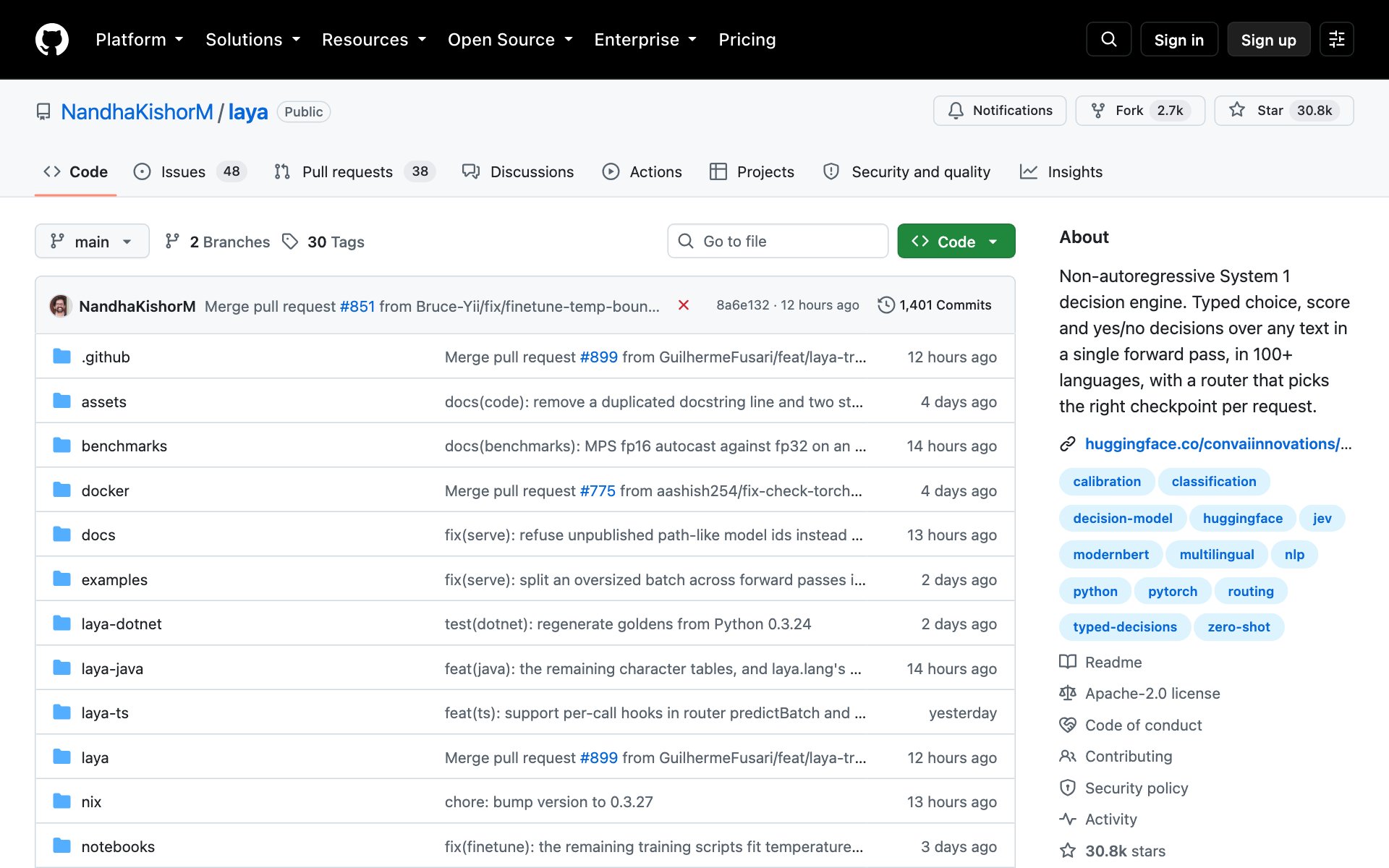
Laya is a free, open source model that reads a message and picks one answer from a list of choices. Straight out of the box it is weak, but trained on your own examples it scored 77 percent on the author's benchmark, ahead of Jev's published 73. Claude Code can run that training for you.
👉 https://www.skool.com/claudecodeclub
Laya: a free model that picks the right answer from a list
Laya is a free, open source (Apache 2.0) project by NandhaKishorM. You give Laya a piece of text, like a support ticket, plus a few choices, like Billing, Technical or Other. Laya picks one in a single pass, with no text writing, so it answers in about 30 milliseconds on a GPU. It is built to do the same job as Jev, the hosted model from TypeSafe. Laya is an independent project, not an official open source copy of Jev.
Check the numbers before you trust Laya
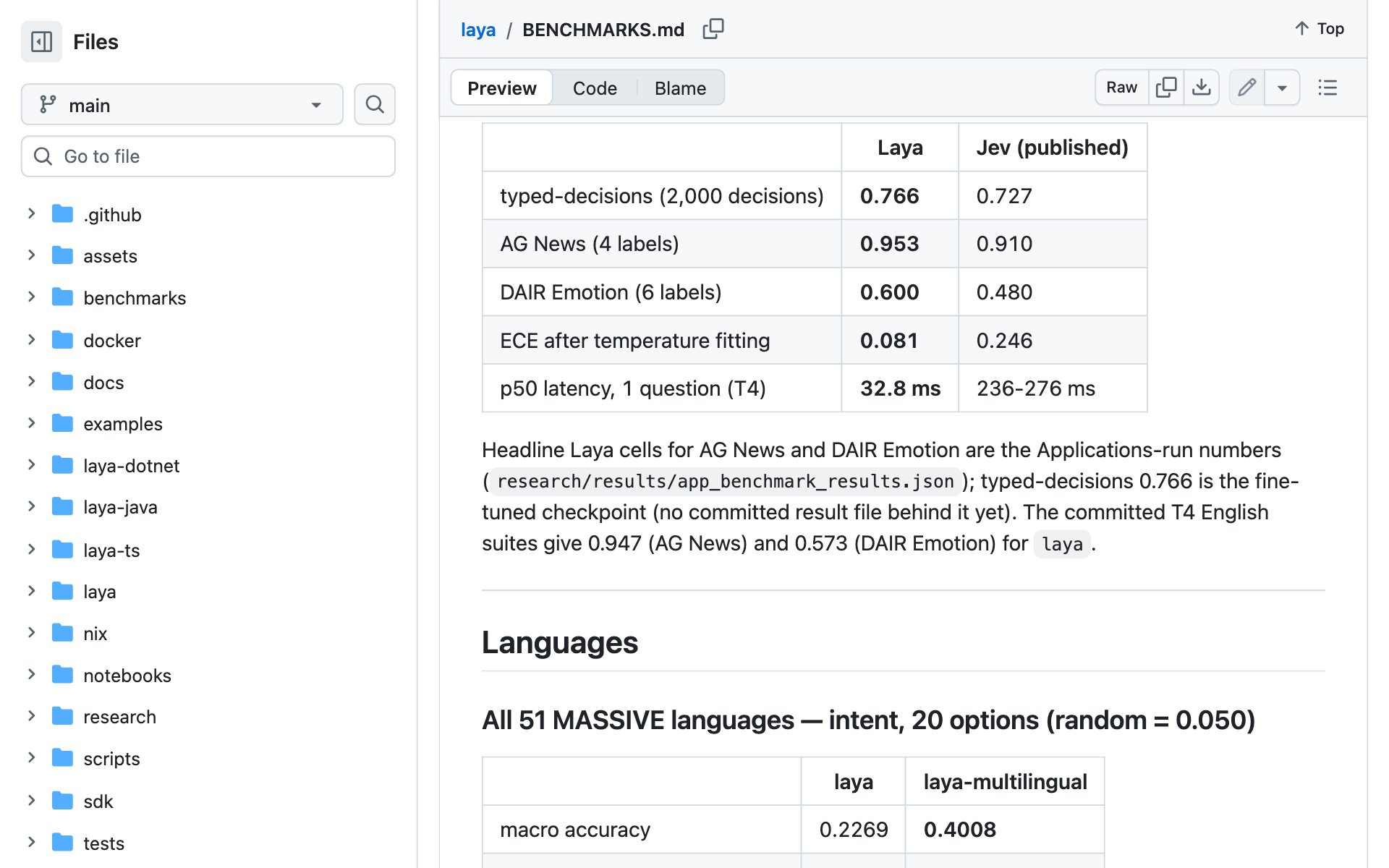
Speed: Laya's own benchmarks list 32.8 milliseconds for one question on a T4 GPU. Jev's published speed is 236 to 276 milliseconds. Those Jev numbers come from other people's measurements, so treat them as a rough guide. Speed also depends on your computer: a newer GPU is faster, and a laptop CPU is slower.
Accuracy: Straight out of the box, Laya scores 36 percent on the typed-decisions test, against 73 percent for Jev. Laya starts weak because the base model has not seen your kind of questions yet. After training on that test's examples, the Laya checkpoint called laya-typed-decisions scores 77 percent. That is the author's own result on one benchmark, so test it on your own data before you rely on it.
Install Laya with Claude Code
How to install Laya: copy the repo URL below, paste it into Claude Code, and say: install this.
repo URLhttps://github.com/NandhaKishorM/layaOr install Laya by hand. It needs Python 3.10 or newer:
bashpython -m pip install layaTrain Laya on your own examples with Claude Code
The Laya repo ships a fine-tuning notebook for Kaggle (two T4 GPUs) and a script for Apple Silicon Macs. Both run the whole loop: build a dataset, train, calibrate and test. Your job is to collect examples where you already know the right answer, like 500 old support tickets with the department that handled each one. Claude Code does the rest.
Best practices for training Laya:
- Use real examples from your own work (tickets, emails, reviews) with the correct answer already attached. Laya learns from your answers, so wrong labels teach it wrong habits.
- Keep each question to about 20 choices or fewer. Laya's own docs say Jev is still stronger on very long option lists.
- Stay in English with the English checkpoint. For other languages, use laya-multilingual, because the English checkpoint gets much worse outside English.
- Keep some examples out of training and test on them. A score on examples Laya already saw tells you nothing.
- Expect over-confident answers. Laya's calibration step fixes this, so run it before you trust a confidence number.
Prompts to try with Laya:
promptInstall the Laya repo from https://github.com/NandhaKishorM/laya. Then read its fine-tuning section and tell me, in plain words, what data I need to train it to sort [my kind of text, like support tickets] into [my choices, like billing, technical, other].promptHere is a spreadsheet of [my examples] with the right answer in the [answer] column. Turn it into Laya's training format, hold back 20 percent for testing, run the Laya fine-tuning script on my computer, and report the test score next to the untrained Laya score.Where to start
- Pick one job where you already have answers, like sorting support tickets by department.
- Run untrained Laya on 50 of your examples first. That gives you a before score.
- Train on the rest, then score Laya again on the 50 you held back. The gap between the two scores is your real result.
👉 https://www.skool.com/claudecodeclub
Common questions
Is Laya really free?
Yes. Laya is open source under the Apache 2.0 license, so you can use and change it for free. Training it on a cloud GPU such as Kaggle can have its own limits or costs, depending on the service you pick.
Is Laya the same thing as Jev?
No. Jev is a hosted model from TypeSafe. Laya is a separate open source project by NandhaKishorM that does a similar job: it answers typed questions about text.
Does Laya really beat Jev?
On the author's typed-decisions benchmark, the trained Laya checkpoint scored 77 percent and Jev's published score is 73 percent. The Jev numbers are third-party figures that the Laya author did not measure, and it is one benchmark, so test Laya on your own examples.
Why is Laya so weak before training?
The base Laya model has not seen your type of questions. It scores 36 percent on the typed-decisions test untrained, and 77 percent after training on that test's kind of examples. Training on your own data is the step that makes Laya useful.
Can Claude Code really train Laya for me?
Claude Code can run Laya's fine-tuning script on your computer, prepare your examples and report the score. You still need your own examples with the right answers attached, and a computer or cloud GPU that can handle the training.
Keep going
Get the free Laya training guide
Get 650+ plug-and-play skills, MCPs & prompts, plus 8,000+ members - $9/mo, cancel anytime.
Join the Club