
How To Build Income With Claude After A Layoff: The Five Steps
TL;DR
You do not need a job offer to start earning again. You need one problem people already complain about and a small product that solves it. This guide walks the five steps I would take after a layoff: research with Claude, pick one problem, build a small digital product, promote it every day by copying a proven hook and format, then sell it and learn from the people who buy.
The full guide is right here on this page. Download it if you want a copy that opens offline.
Download the guideI got laid off in April of 2025. I went from being an art director for brands like Apple, PlayStation and Nissan to someone who builds with AI every day, and I started posting about it right away. This guide is the plan I would follow if I lost my job tomorrow and had to start over, in the order I would do it.
Start from one problem, not a job offer
After a layoff the default move is to wait for someone to hire you. That is a reasonable plan, but it leaves the timeline in someone else's hands. The alternative is smaller than it sounds. All you need is one problem people already complain about and a simple product that solves it.
The whole plan has five steps. Research what people in your field complain about. Pick one problem. Build a small digital product. Promote it every day. Sell it, then learn from the people who buy. Claude helps with every one of them, and none of them needs a hiring manager.
The point of the five steps is choice. You pick the problem, you pick the price, and you pick who you work with. That matters most right after a layoff, when it feels like you have none.
Step 1: Let Claude read what your field complains about
Research comes first because without it you are building for yourself. Do not guess what might work. Go straight to what people are already asking for. I use Reddit for this, because it shows me an audience's biggest pain points, their bottlenecks and what they hope to achieve.
My first community is the example of what skipping this costs. It was about using AI to build a personal brand. The content was good, but the offer and the messaging were not right, because we had not done enough research.
The method is to open Claude Code, tell it what you do for a living, and ask it to read what people in your field are complaining about right now. In my example the person is a marketing coordinator who just got laid off. There is one practical detail. Reddit blocks browsers, so you tell Claude to use a free archive called Arctic Shift instead of the Reddit site itself.
A good research request has four parts. It names the source. It asks for the three biggest problems ranked by how often they come up. It asks for what is really going on behind each one, plus a few quotes word for word. And it makes Claude report how many posts it looked at and only use what it actually read. That last part is your protection against invented findings.
Then let it run. It takes a couple of minutes. What comes back is the three biggest problems in order, with proof.
Know what a good finding looks like
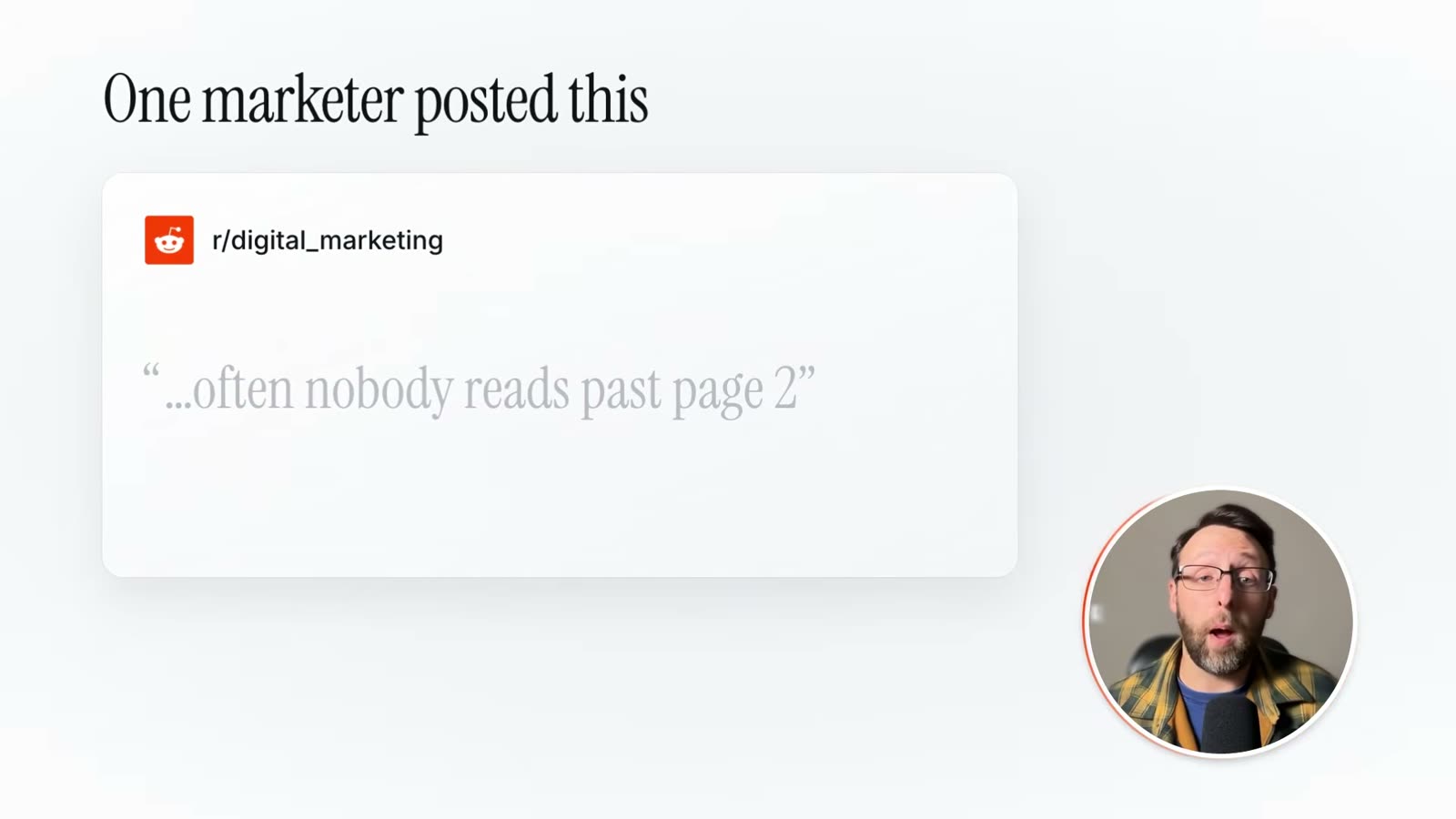
The worked example in the video is weekly client reports. A marketer posted on the digital marketing subreddit that often nobody reads past page two. That one line is the kind of quote to look for, because it is specific, it is in the person's own words, and it describes something that costs them time and credibility every week.
- It comes from a real person, with the post to prove it.
- It names a concrete task, like a weekly report, not a vague mood like feeling stuck.
- It shows up repeatedly, which is why you ask Claude to rank by how often it comes up.
- Someone could plausibly fix it with something they download.
If a finding fails the last test, it is probably a real problem but the wrong first product. Skip it and take the next one on the list.
Step 2: Pick the one problem you can actually fix
Claude gave you three problems and now it is your turn to choose. This is the first real decision point, and it is yours, not the tool's. I use four tests.
- 1I pick a problem I am confident I can solve fairly quickly.
- 2I pick one I am personally knowledgeable about.
- 3I pick one I am interested in.
- 4I pick one I am motivated to work on for more than a single day. It could be weeks, months or even years.
If you are not sure which of the three fits, ask Claude. Tell it what you know how to do, in plain terms, and ask which of the three problems you could help with the most and why. In the example, the person knows how to put together weekly marketing reports, so the choice becomes client reports that nobody reads.
Step 3: Build a small digital product
A digital product is just something people can download to solve a problem. It can be a checklist, a template pack or a short guide. Start with something small.
The build request has three ingredients. Tell Claude the problem. Tell it what you know about fixing it. Tell it what you want back. In the example, the ask is a one-page weekly report template for marketers whose clients do not read reports, and the fix comes from my own way of doing reports: the one number that matters first, then what changed, then what we are doing next.
Two details make the result better. First, ask for a sample report with made-up numbers clearly marked as an example, so a buyer sees exactly how the template works. Second, end the request by telling Claude to use only what you told it and not to add details you did not say. That last line matters, because without it Claude can add small details nobody asked for.
If you have examples or references of what good looks like, share them. Claude works well when you give it specific references.
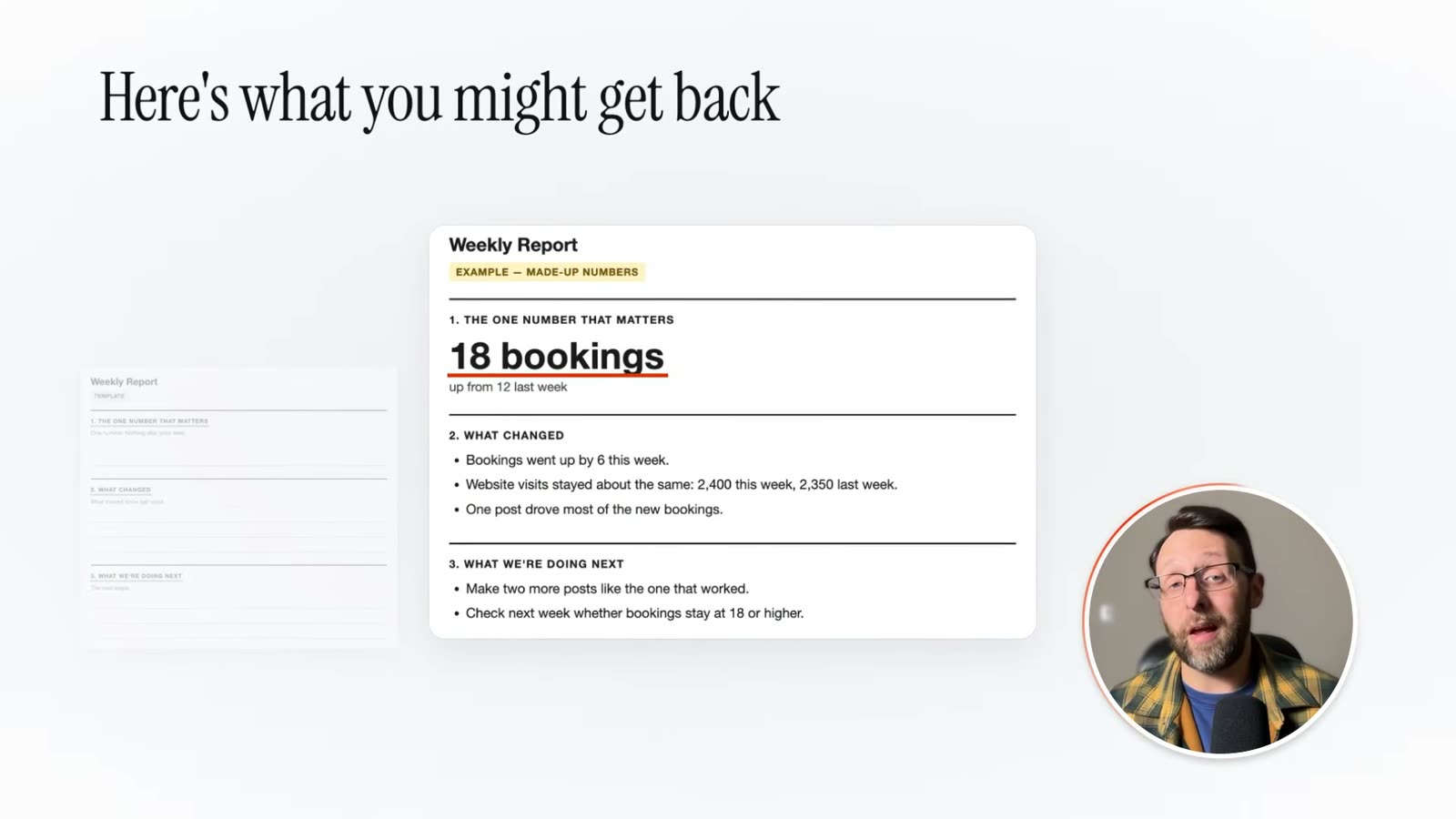
What you get back is a finished one-page template with three sections, the one number that matters, what changed, and what happens next, plus the sample report. Read it and change anything that does not sound like you. Then ask Claude to turn it into a clean file you can share, like a PDF.
Understand why a small product opens more doors than it sells
This is the idea that reaches past the demo. A first product is not only a source of sales. It gives you a choice in what you work on next.
One of the first digital products I built was an automation template for LinkedIn. It researched trending news stories, turned them into a post in my tone and voice, and published it. I shared it in the fourth YouTube video I ever made. Multiple people reached out and asked me to build it for them. They became my first clients.
From there I had options. I could keep selling automations as digital products, I could take on clients, or I could do both. The product was a way to find out what people wanted, and the answer came back as a choice instead of a rejection. After a layoff, that is the opposite of waiting by the phone.
Step 4: Promote it every day by copying what already works
A product does not sell itself. You have to keep telling people about it, and if it truly helps people there is no shame in selling it. Start with a strong hook, but do not guess at one. Look at what is already working.
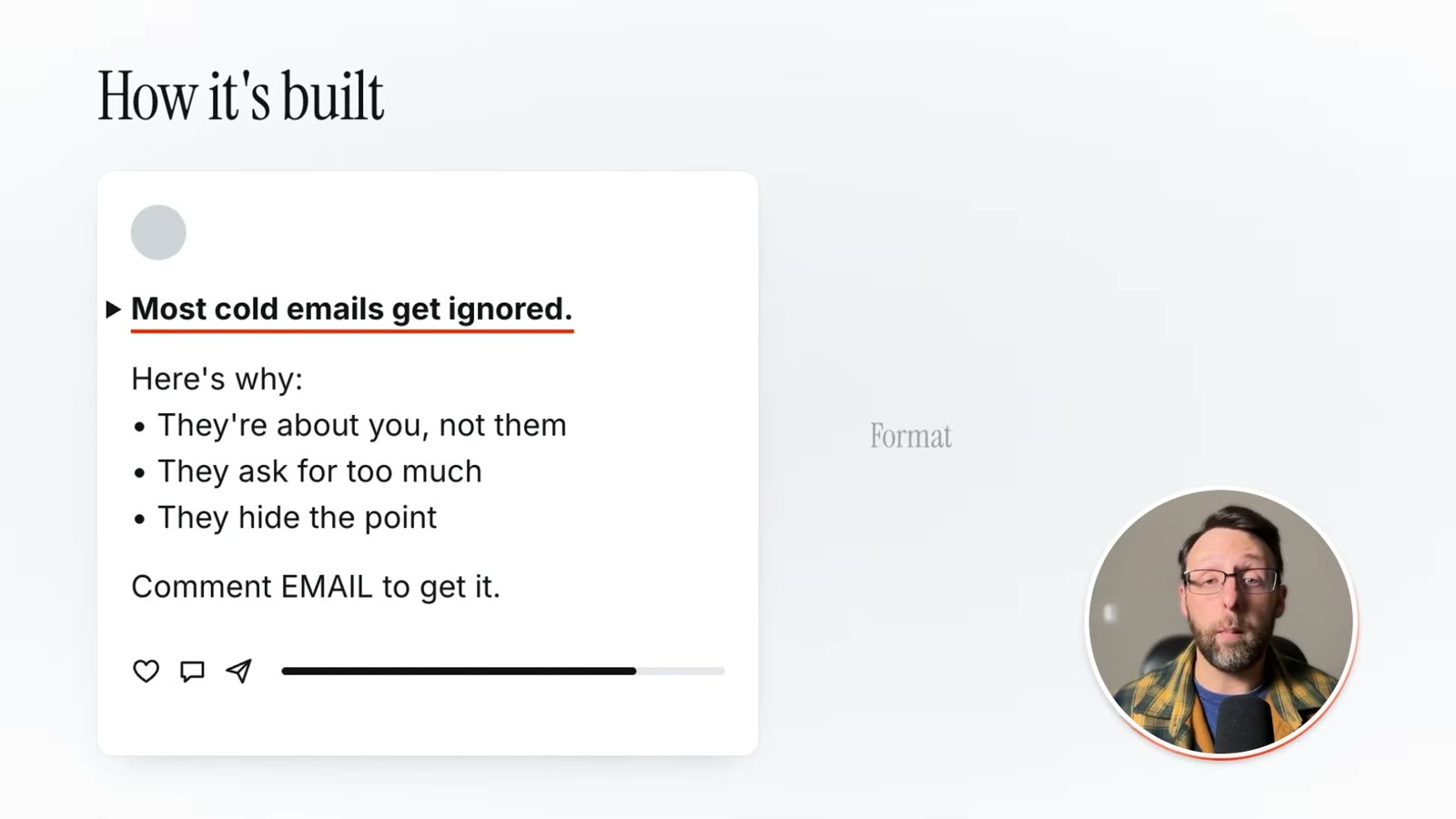
If you really look, there is a post that stops you almost every day. Scroll your feed on LinkedIn, Instagram or wherever your people are, and look at the high-performing creators in your niche. When a post stops you, study how it is built. Two terms matter here. The hook is the first line, the part that made you stop. The format is the shape of the post, meaning the order of its parts from the first line to the last.
To find the format, read the post one line at a time and ask what each line does. In the example, the first line makes a bold claim and the last line asks you to comment. If you are not sure, paste the post into Claude and ask it to describe the format.
Then write down the hook and the format, and replace their details with your own. The request to Claude is simple. Hand over the post that stopped you, ask it to keep the same format, and have it rewrite the post for your product. Tell it to use only what you told it and not to make up stories about you, and end with a comment keyword so people can ask for the resource.
Add an image and a comment keyword
On LinkedIn you can add an image too. Claude cannot make images directly, but tools like Higgsfield or Kai AI can, and ChatGPT can do it in the same window. Ask for a product mock-up of your template, like a studio shot of a product box. At the bottom of the image, put the comment keyword, for example comment report to get it.
People comment and you send them the resource. LinkedIn likes this, and it is great for engagement. On Instagram you can do the same thing with ManyChat.
Pick one platform and stick with the format that works
Once you find a format that works, stick with it. The first format that worked for me was five ChatGPT prompts. I became the ChatGPT prompts guy: five ChatGPT prompts for starting a side hustle, five for passive income. I gave people prompts they could copy and paste to get the result they wanted. Once I had the format, I could make a video in about 10 to 15 minutes.
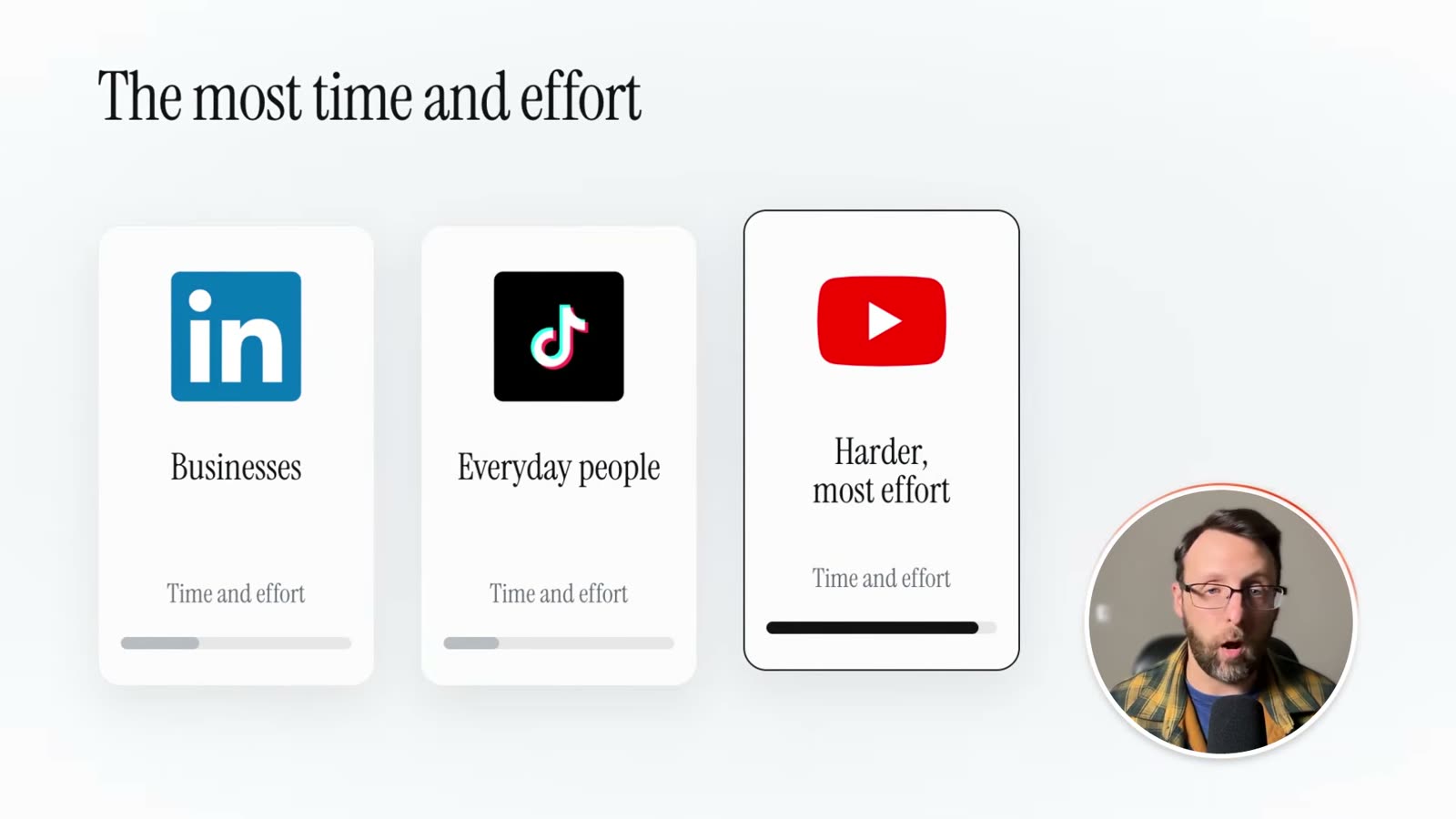
Pick the platform that fits who you sell to.
- LinkedIn, if you sell to businesses.
- TikTok, if you sell to everyday people.
- YouTube, if you want to commit to something harder. It takes the most time and effort of the three, but in my opinion it is the best place to nurture an audience and it has the biggest compounding effect of any platform.
I recommend most people start with something simple like TikTok. Whichever you pick, there is no barrier to entry. You do not need flashy editing. You can pick up a camera, film and post.
It is a volume game. Each post does not live very long, but you get a lot of reps in very quickly, so you learn what works and what does not. Some people will buy and some will not. I built automations live in my YouTube videos and then said, if you want this already done for you, grab it from the link in the description. That link went to my Gumroad store, and for $6 you could buy it. It is not complicated, but it takes time and commitment.
Step 5: Put it on a page and price it low
Put the product on a page where people can already pay for it, like Gumroad or Whop. Ask Claude to help you write the page. The request is short: a sales page that says what it is, who it is for and what they get, kept plain and honest.
Then pick a price and start small. I picked $6 totally at random. It felt cheap and affordable. A low first price removes the reason to hesitate, and what you need from the first sales is people, not profit.
Learn from your first buyers and decide what to build next
Once people buy, you learn who they are, so ask them. Have Claude write five short questions you can send your first buyers to find out what they struggle with next. Their answers tell you what to build next.
Two directions usually come out of this. Maybe it is a bigger problem that is worth more. Maybe it is the same help delivered faster and better. Either way, you can charge more for it.
This is how a small product becomes your next offer. For me, the templates grew into a community. I wanted one place for everyone so they did not have to buy the templates one at a time.
Treat bold claims from strangers as noise
I recently saw a marketer on Instagram say he sold a pack of Claude skills for video editing and made a huge amount in a single month. That is what he claims, and I cannot verify it. It does show there are people making money with this. It is also not where you need to start.
You just need to earn enough to stay in the game. Comparing your first product to someone else's best month is a good way to quit before it compounds.
Start creating content today
I tell everyone to start creating content now, and not because of going viral or a quick sale. What you post today can still be bringing people in a year from now, five years from now, even ten. It keeps building on itself.
To me that makes it the most valuable thing you can build, because your audience is made up of people who know and trust you and people you can sell to. You are also allowed to evolve, and your content is allowed to evolve with you. People want to see your journey, which gives you the freedom to explore, experiment and share it with others on a similar path.
Go from reading this to a first sale in one sitting
- 1Open Claude Code, say what you do for a living, and ask it to read what people in your field complain about, ranked, with word for word quotes and a post count.
- 2Search one quote to confirm it is real.
- 3Pick one problem using the four tests, and make it small enough to explain to a friend.
- 4Tell Claude the problem, what you know about fixing it, and what you want back. Ask for a sample marked as an example, and tell it to add nothing you did not say.
- 5Edit the result until it sounds like you, then turn it into a PDF.
- 6Find one post that stopped you this week, break it into hook and format, and rewrite it for your product with your real details.
- 7Put the product on Gumroad or Whop, write a plain sales page with Claude, and pick a small starting price.
- 8Post, send the resource to everyone who comments, and ask your first buyers five short questions.
Common questions
Do I need an audience before I start?
No. I started posting right after my layoff, and the promotion step is built around finding a format that already works and copying its shape. You build the audience while you sell, and there is no barrier to entry on a platform like TikTok.
What if I do not know what to make?
Let the research decide. Ask Claude to read what people in your field complain about, take the three biggest problems, then use the four tests to pick the one you can fix quickly and know something about. If you cannot explain the fix to a friend, pick a smaller problem.
How do I know Claude is not making up the research?
Ask it to report how many posts it looked at and to use only what it actually read, then search one of its word for word quotes yourself. You should always check what an AI agent gives you.
What should I charge for my first product?
Start small. I picked $6 totally at random because it felt cheap and affordable. You can charge more later, once your buyers tell you what they would pay for next.
Which platform should I post on first?
Pick the one that fits who you sell to. LinkedIn for businesses, TikTok for everyday people, and YouTube if you want the best long-term compounding and can handle the extra effort. I recommend most people start with TikTok.
Keep going
- The Four Steps That Turn AI Skills Into Actual IncomeVideo walkthroughs · 13 min
- How To Build A $10,000 Mobile Microsite With Claude CodeVideo walkthroughs · 14 min
- How To Start A Faceless YouTube Channel With AIVideo walkthroughs · 13 min
- How To Get Your First AI Automation ClientVideo walkthroughs · 12 min
Want the exact prompts and the whole system done for you?
Get 650+ plug-and-play skills, MCPs & prompts, plus 8,000+ members - $9/mo, cancel anytime.
Join the Club